The Seven Chakras: Balancing the Energy System
Exploring the architecture of human consciousness through the house we live within.
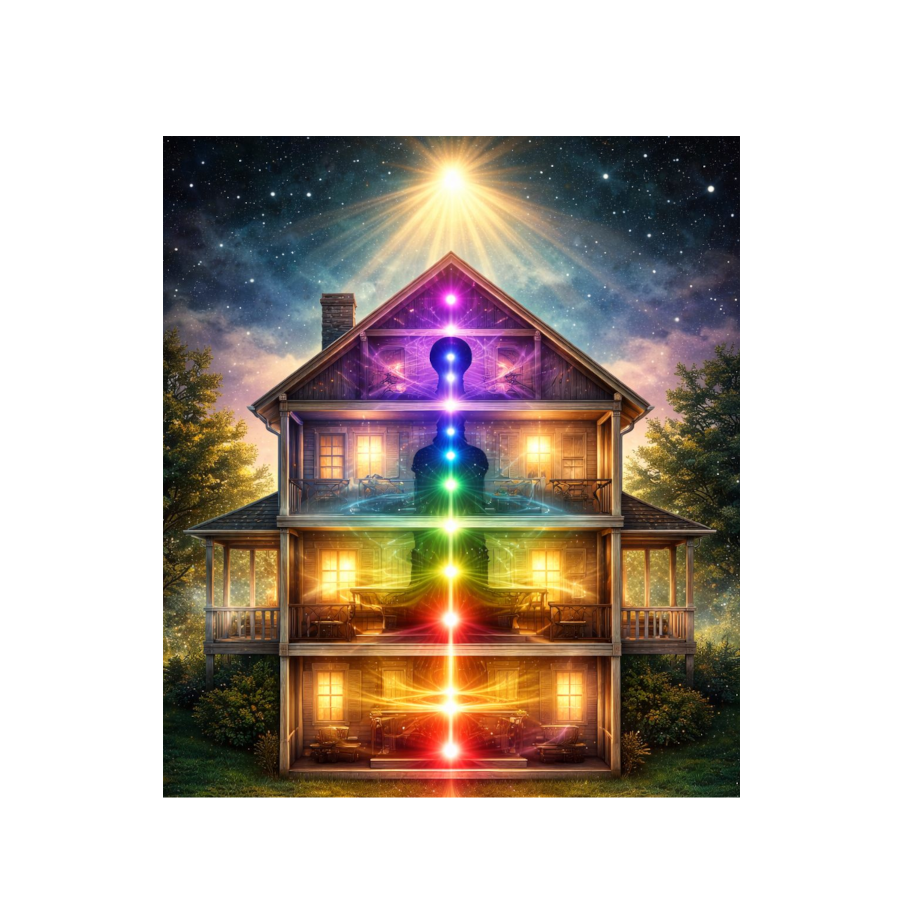
The chakra system describes seven primary energy centers that connect your physical body with the emotional, mental, and spiritual layers of your being. In this teaching, we explore the chakras through the practical metaphor of a house—a living structure where energy flows, rises, and circulates.
Before diving into the architecture below, you may want to begin with our free Chakra Overview Article, our 10-Minute Chakra Tune-Up Video, or ground your nervous system with our Solfeggio Chakra Frequency Video.
Before diving into the architecture below, you may want to begin with our free Chakra Overview Article, our 10 Minute Chakra Tune Up Video or ground your nervous system with our Solfeggio Chakra Frequency Video
Beyond Spiritual Jargon: Chakras as a Lived Experience
The seven chakras are energy centers within the human energy system that influence physical health, emotional patterns, mental clarity, and spiritual awareness. Each chakra governs specific aspects of life — from safety and relationships to expression, intuition, and consciousness. Evolution of the Chakras Article
Energy centers are not abstract philosophies; they are real, lived experiences. We experience our chakras daily through physical sensations, emotional reactions, relational habits, and recurring life themes.
When subtle energy flows freely through your system, you experience absolute clarity, emotional steadiness, and vital health. When that energy becomes restricted or somatically contracted, you feel stuck—whether physically, mentally, or spiritually. This framework is drawn from over twenty-five years of clinical and energetic practice and is presented in The Seven Chakras: The House We Live Within by Jill N. Henry, EdD.
🏠 The House as a Metaphor for the Chakra System
In this approach, the chakra system is understood as a seven‑story house.
Each chakra represents a room within the house. Energy circulates vertically through the structure, much like heat rising through vents between floors. These energetic “vents” allow higher‑frequency awareness to move downward into daily life — and lived experience to rise upward into wisdom.
The vents are always present, but they are not always open.
Chakra work is not about forcing energy upward. It is about restoring circulation — allowing energy to move freely so the entire house functions as a unified system.
When one room becomes blocked, the flow above and below it is affected. When balance is restored in one chakra, the doorway to the next often opens naturally.
This metaphor reveals a core truth of healing: We do not heal by escaping the body — we heal by inhabiting it fully.
Overview of the Seven Chakras and Their Core Themes
Below are the seven chakras and their primary themes. Each chakra name can link to its full article and video.
Root Chakra (Muladhara) — safety, grounding, basic needs → Link to Root Chakra Article + Root Chakra Frequency Video (396 Hz)
Sacral Chakra (Svadhisthana) — emotions, relationships, creativity → Link to Sacral Chakra Article + Sacral Chakra Frequency Video (417 Hz)
Solar Plexus Chakra (Manipura) — identity, confidence, personal power → Link to Solar Plexus Article + Solar Plexus Chakra Frequency Video (528 Hz)
Heart Chakra (Anahata) — love, compassion, healing → Link to Heart Chakra Article + HeartChakra Frequency Video (639 Hz)
Throat Chakra (Vishuddha) — communication, truth, expression → Link to Throat Chakra Article + Throat Chakra Frequency Video (741 Hz)
Brow Chakra (Ajna) — intuition, insight, inner wisdom → Link to Brow Chakra Article + Third Eye Chakra Frequency Video (852 Hz)
Crown Chakra (Sahasrara) — unity, awareness, connection to Source → Link to Crown Chakra Article + Crown Chakra Frequency Video (963 Hz)
The lower three chakras ground us in physical and emotional life. The upper three connect us with higher awareness. The heart chakra bridges the two.
Together, they form a living system — not separate parts, but one flowing continuum of consciousness.
Root Chakra (Muladhara): Safety, Grounding, and Basic Needs
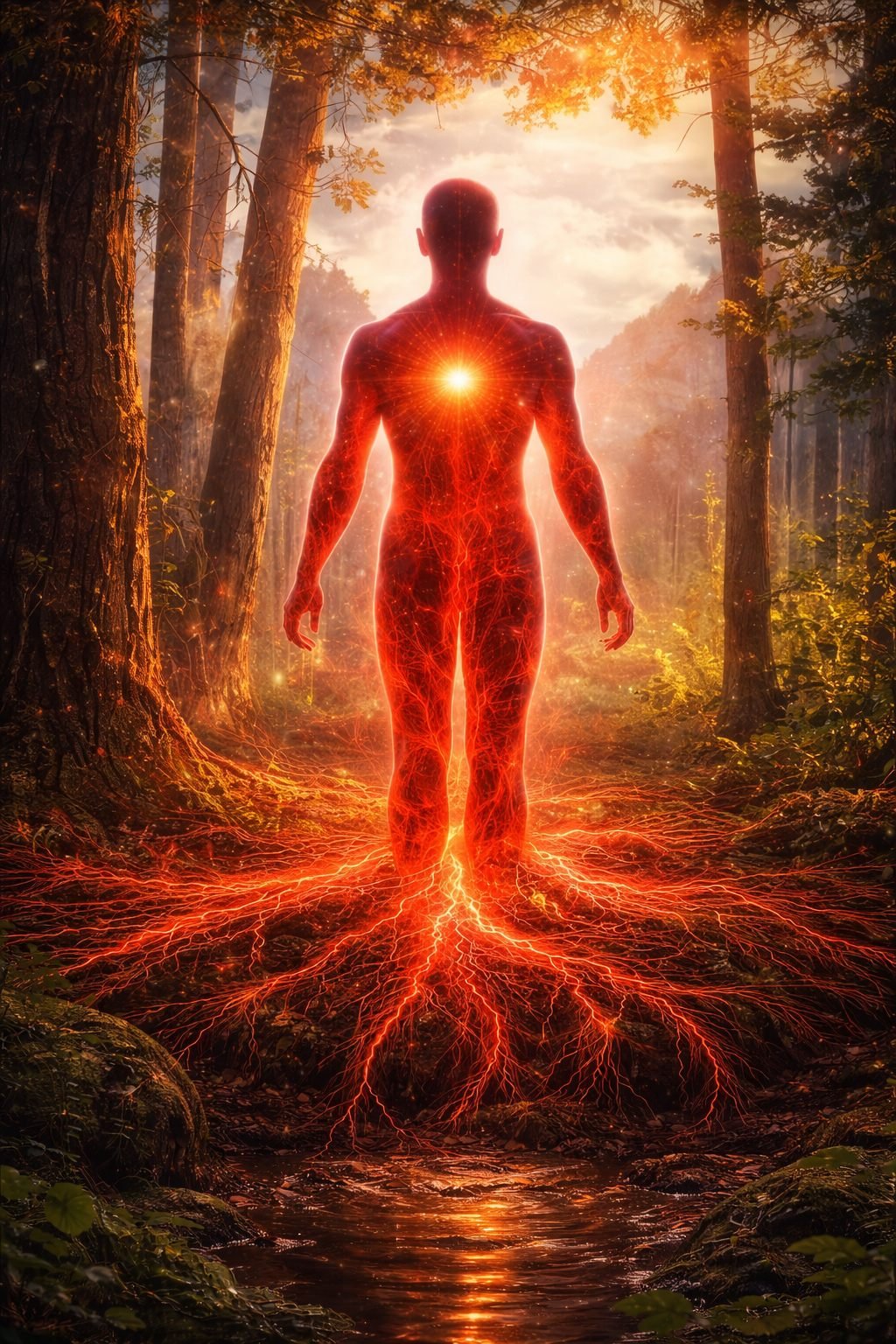
The root chakra, located at the base of the spine, governs our relationship with the physical world. It relates to survival, health, financial security, and the fundamental question: Is it safe for me to be here?
When balanced, we feel grounded, present, and supported by life. When disrupted, fear often dominates — fear of loss, instability, or not having enough.
For a deeper exploration, visit the Root Chakra Article or the Root Chakra Solfeggio Sound Video

Sacral Chakra (Svadhisthana): Emotions, Relationships, and Creative Flow
The sacral chakra, located in the lower abdomen and sacrum, governs emotional movement and relational energy. It influences intimacy, creativity, pleasure, boundaries, and the ability to let go.
When balanced, this center supports emotional resilience and healthy connection. When blocked, patterns such as over‑attachment, fear of abandonment, or resistance to change may appear.
To continue exploring, visit the Sacral Chakra Article or the Sacral Chakra Frequency Video (417 Hz).
Solar Plexus Chakra (Manipura): Identity and Personal Power
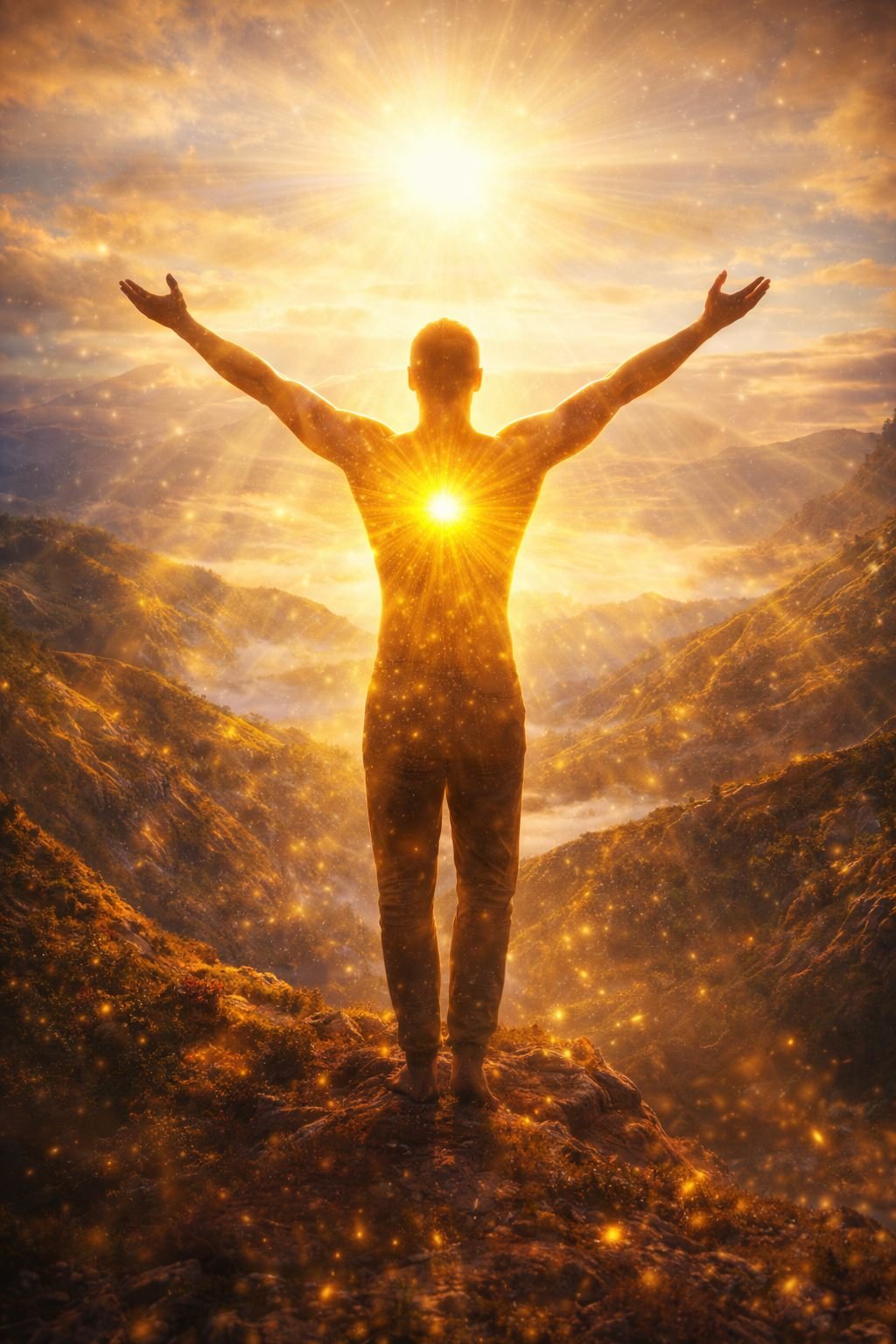
The solar plexus chakra, located just below the ribcage, is the center of personal identity and will. It governs confidence, motivation, discipline, and the healthy use of power.
When balanced, the solar plexus expresses leadership rooted in integrity. When imbalanced, power may swing between domination and collapse.
You can explore this further in theSolar Plexus Chakra Article or the Solar Plexus Chakra Frequency Video (528 Hz)
Heart Chakra (Anahata): Love, Compassion, and Healing
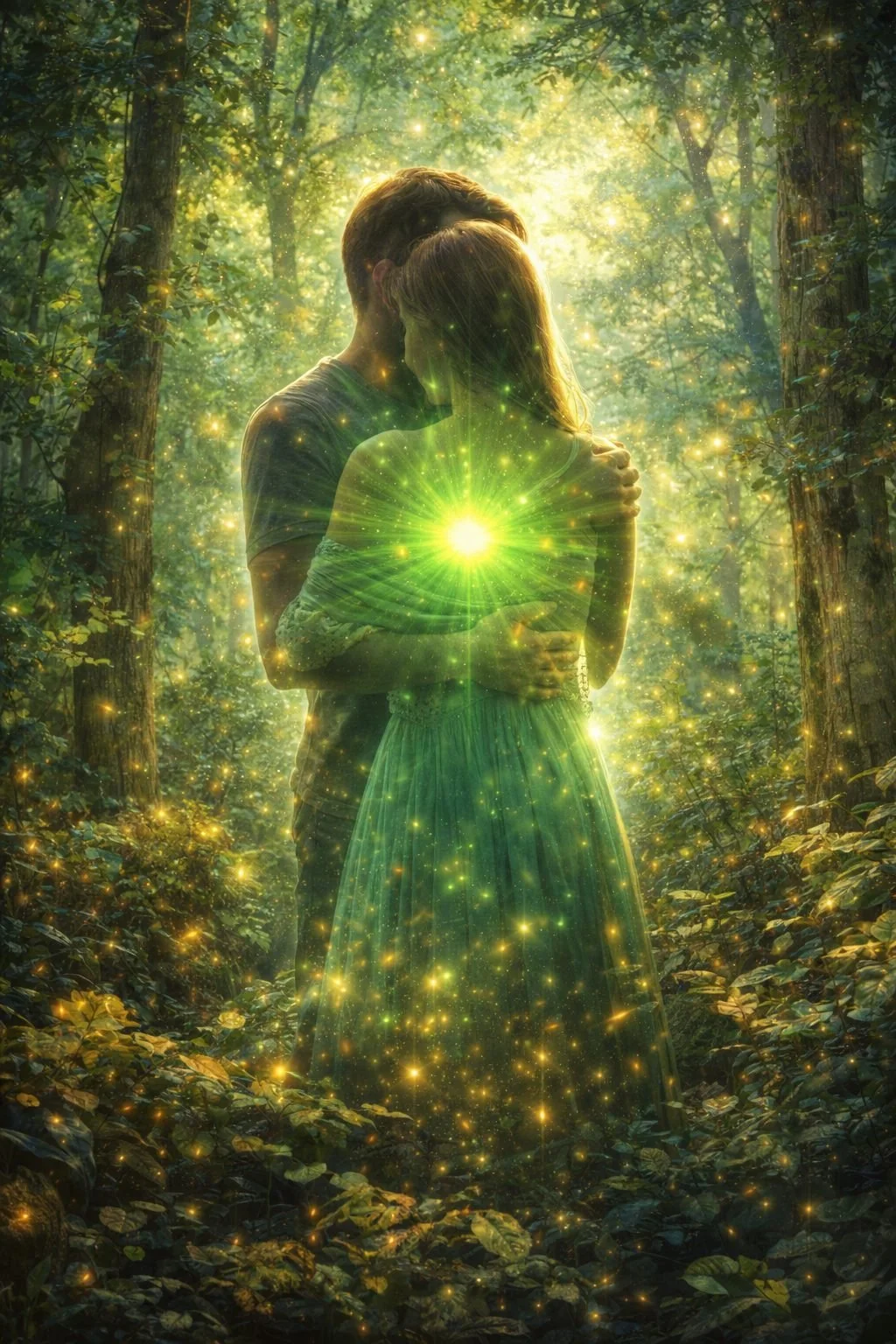
The heart chakra sits at the center of the chakra system and acts as its harmonizer. It governs love, forgiveness, emotional balance, grief, and connection.
Heart chakra work is not sentimental. It is courageous. It involves learning to love without conditions — beginning with oneself.
For more depth, visit the Heart Chakra Article or the Heart Chakra Frequency Video (639 Hz)
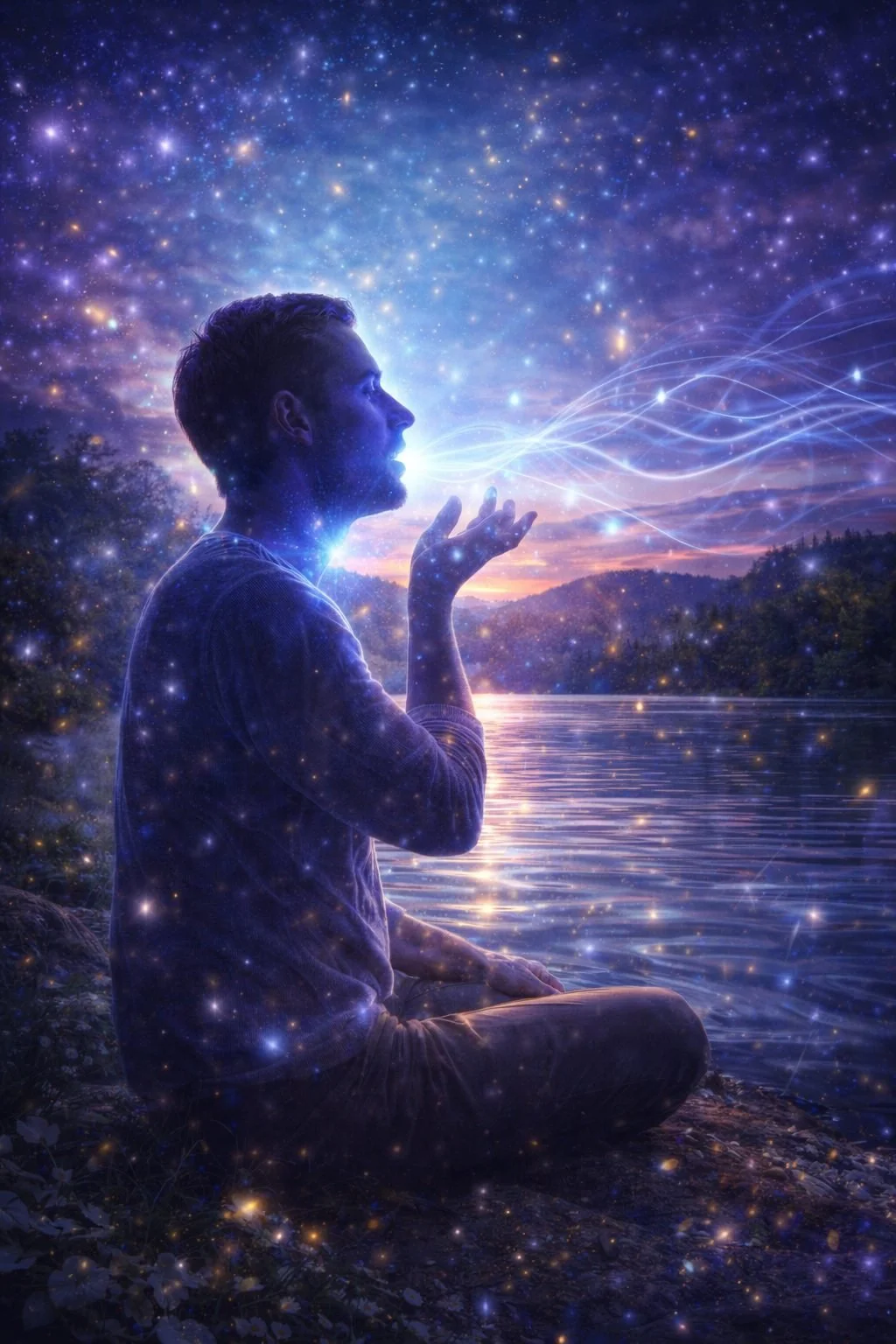
Throat Chakra (Vishuddha): Communication and Truth
The throat chakra governs expression, communication, and authenticity. It influences speaking truth, listening deeply, creativity, and communication with inner guidance.
When blocked, individuals may struggle to speak, over‑speak, or silence themselves.
You can explore this chakra through the Throat Chakra Article or the Throat Chakra Frequency Video (741 Hz)
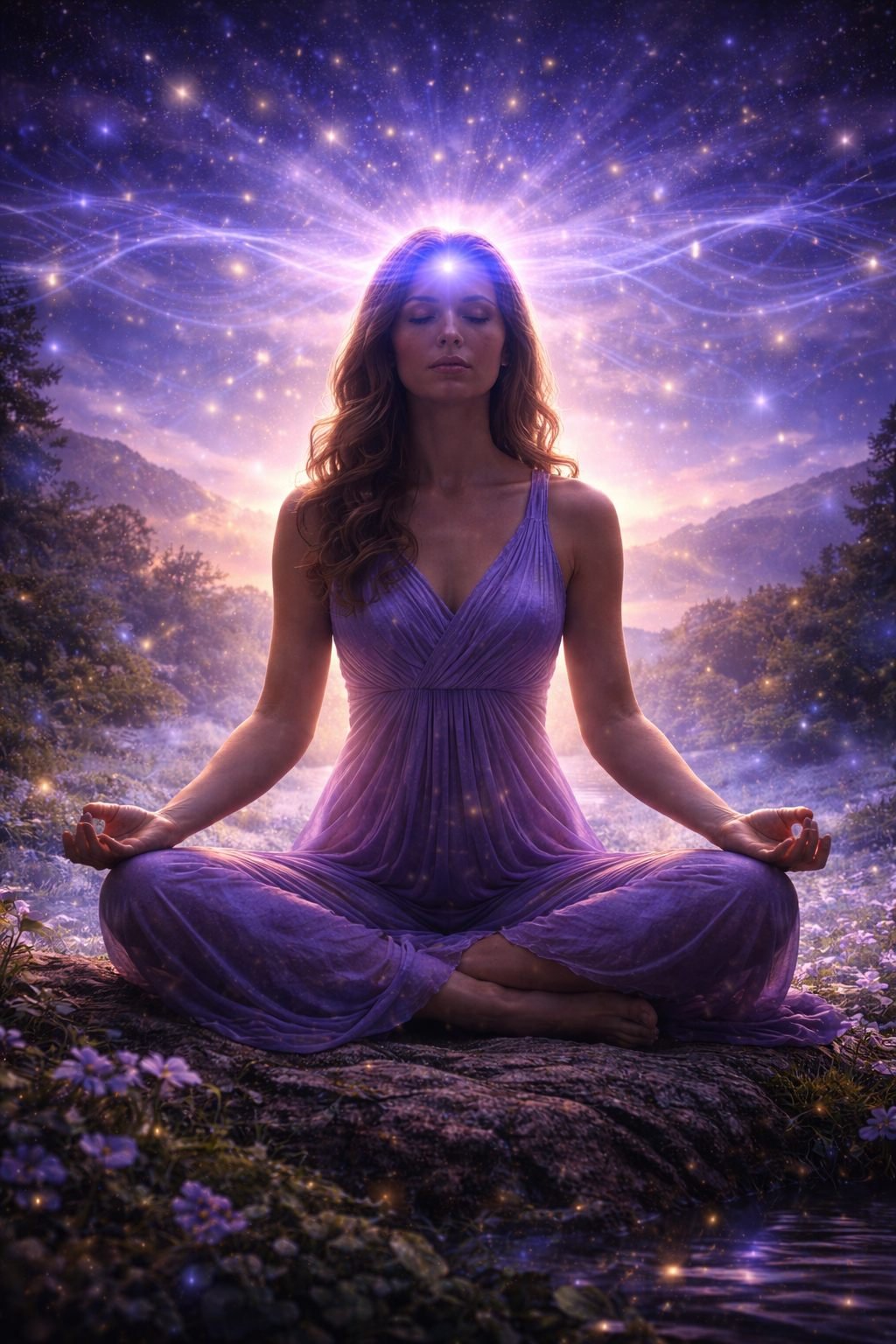
Brow Chakra (Ajna): Intuition and Inner Wisdom
The brow chakra, often called the third eye, governs perception beyond thought. It relates to intuition, insight, imagination, and clarity.
As this chakra opens, perspective shifts. Life is no longer experienced solely from the ground floor of survival, but from a higher vantage point.
To learn more, visit the Brow Chakra Article or the Third Eye Chakra Frequency Video (852 Hz).
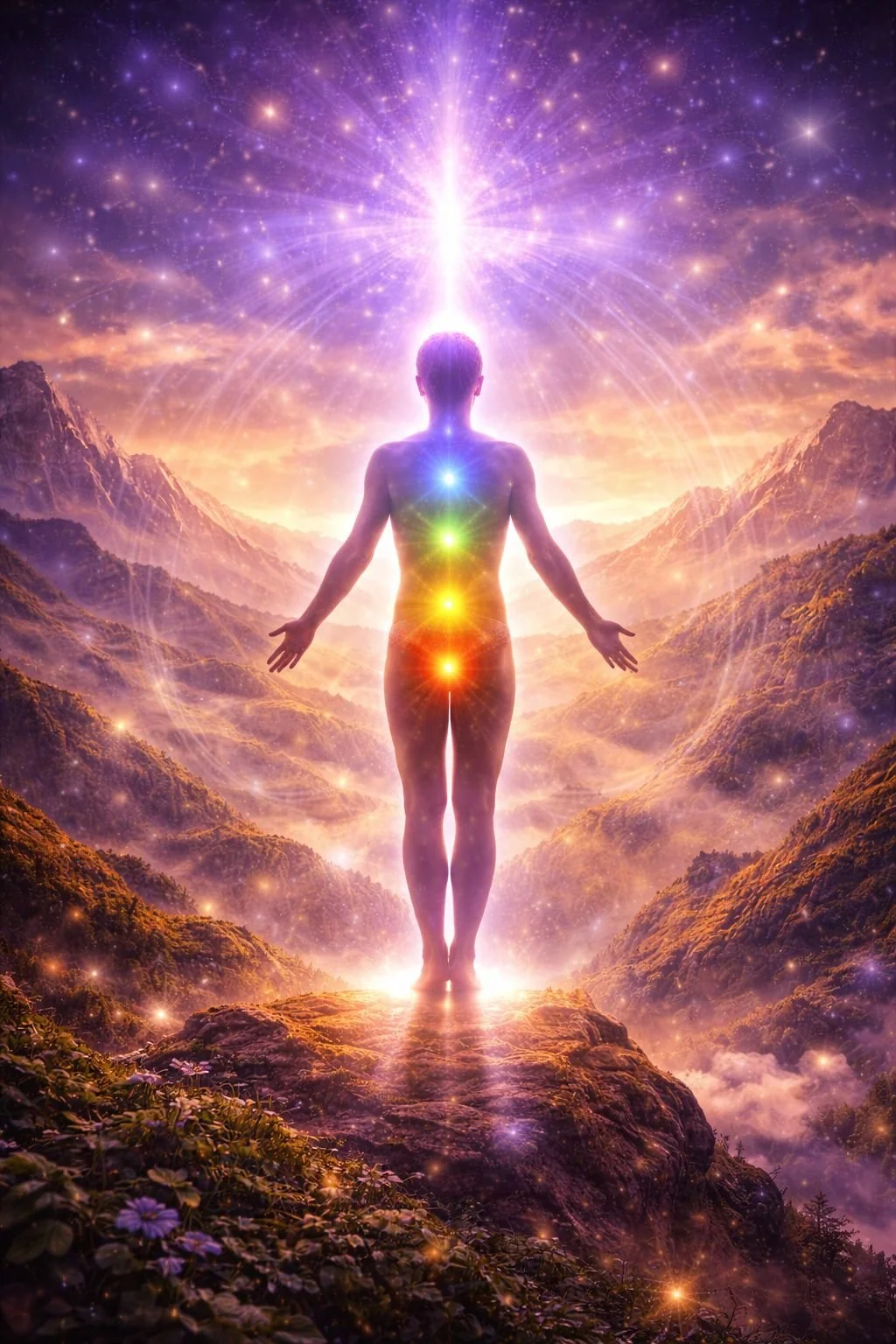
Crown Chakra (Sahasrara): Awareness and Oneness
The crown chakra represents our connection with universal consciousness. It governs presence, unity, surrender, and trust in life.
This chakra is not about escaping the world. It is about living fully within it — free from constant striving or fear.
You can explore this chakra through the Crown Chakra Article or the Crown Chakra Frequency Video (963 Hz)
How to Begin Balancing Your Chakras
Chakra balance does not come from forcing energy upward or trying to “fix” oneself. It begins with awareness.
As we gently observe our patterns — physical sensations, emotional reactions, recurring themes — energy naturally begins to reorganize. Breath, presence, reflection, and compassionate attention open the internal vents that allow energy to circulate again.
If you’d like guided support, you can explore the Practices, Meditation, or Grounding .
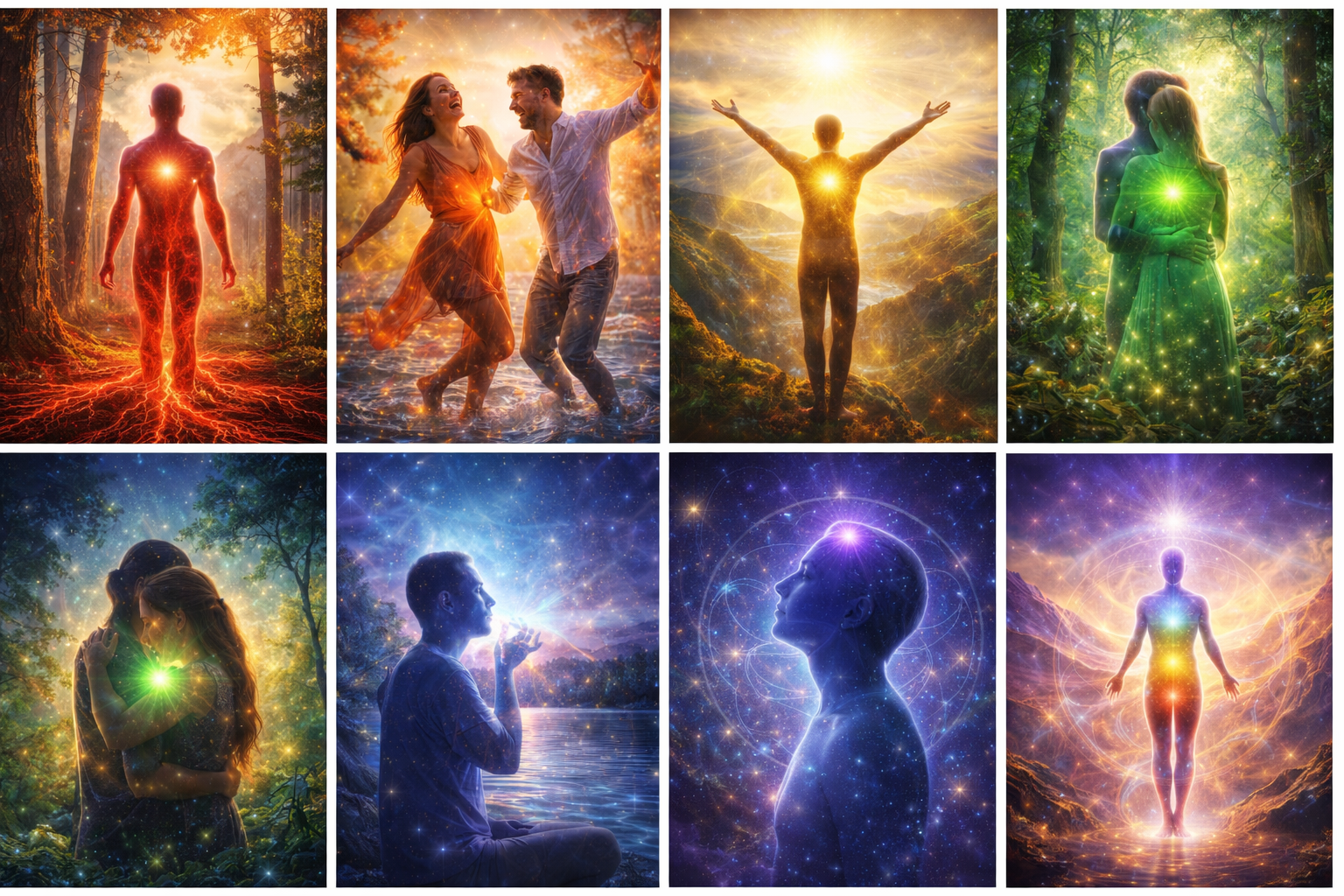
The Chakra System as a Living Path
The chakras are not steps to be completed. They are living rooms within us — each asking for attention at different moments in life.
At times we are called to ground. At times to feel. At times to claim power. At times to soften into love. At times to speak truth. At times to listen inward. At times to rest in presence.
When energy flows freely through the house we live within, life becomes less about striving and more about alignment.
The journey of the chakras is not about becoming someone else — it is about becoming fully who we already are.
To go deeper, you can explore the 51‑Page Chakra Self‑Study Guide, the Chakra Workshop, or experience chakra energy for yourself through individual Chakra Energy Sessions and Coaching & Clarity Sessions..