
Mindfulness Meditation: A Practical Guide to Inner Calm
Regulating the nervous system, quieting the mind, and cultivating steady presence in daily life.
Meditation is not an escape from the world; it is a grounded practice of turning attention inward to meet your life with absolute steadiness, presence, and choice. Rather than fighting your thoughts or trying to force a blank mind, true meditation opens a gentle door to emotional self-regulation and inner clarity. It does not take you anywhere you do not already hold within your own consciousness—it simply helps you remember who you already are.
-
We often think meditation is about achieving a state of perfect, uninterrupted stillness. But if you’ve ever tried to sit quietly, you know the reality is quite different. The mind drifts. The thoughts wander. We get distracted. The true practice isn't about never leaving; it’s about the return. Meditation is the gentle, repeated act of noticing when you’ve wandered and choosing to come back. And then doing it again. And again. Each time you "come back," you aren't failing—you are strengthening your capacity for awareness.
Practice different forms of meditation in a 3 hour workshop offered throughout the year at FeelTheFlow.info
Why Meditation Matters

Calming the Reactive Mind
Most of us spend our hours reacting to an endless stream of subconscious thoughts, emotional triggers, and external demands. This constant mental loop keeps the body's stress response activated, leading to chronic anxiety, somatic tension, and deep emotional fatigue.
Meditation actively interrupts this loop, allowing the mind and physical body to rest together in real time. With committed practice, this somatic down-regulation supports:
Deep Relief from stress and nervous system overload.
Improved Emotional Regulation and somatic awareness.
Greater Mental Clarity, sharp focus, and creative flow.
Enhanced Self-Awareness and deep intuitive insight.
The Chariot Teaching: A Map of Inner Awareness
For thousands of years, meditation has been understood as a way of knowing the deeper Self. The ancient Katha Upanishad describes this through the metaphor of a chariot:
The body is the chariot.
The senses are the horses.
The surface mind is the reins.
The deep mind is the charioteer.
The Self is the owner of the chariot.
When the mind is unrestrained, the senses run wild — like horses without guidance. When the mind is trained through meditation, the senses come under gentle control, and the chariot moves with steadiness and purpose.
Meditation helps us shift from being pulled by life to consciously guiding our experience.
How Meditation Works
Meditation works by shifting attention away from habitual mental patterns and toward present‑moment awareness. As attention settles, the nervous system naturally moves from fight‑or‑flight activation toward rest, repair, and balance. This shift supports calmer breathing, healthier brainwave activity, and a sense of internal spaciousness.
Over time, meditation teaches the mind how to observe rather than react — creating choice where there was once automatic response.
Meditation and Brainwave Frequencies
One of the most powerful ways meditation supports well‑being is through its influence on brainwave frequencies. Each frequency range corresponds to a different state of consciousness. Meditation allows us to move intentionally among these states, rather than being pulled by stress or habit.
Gamma (32–100 Hz) Heightened awareness, insight, integration. Associated with advanced meditation, compassion, and expanded perception.
Beta (15–38 Hz) Alertness, rapid thinking, stress, vigilance. The fight‑or‑flight response arises from beta dominance.
Mu (12.5–15 Hz) Flow states — sharp yet relaxed focus. The “good day” frequency where everything feels natural and fluid.
Alpha (8–15 Hz) Relaxed awareness, creativity, the bridge into meditation. Associated with reduced cortisol and increased serotonin.
Theta (4–8 Hz) Deep inward awareness, intuition, emotional processing. The realm of dreams, imagery, and subconscious insight.
Delta (0.5–4 Hz) Deep healing, stillness, cellular repair. The body’s natural reset state.
Meditation gradually guides the mind from beta toward alpha, theta, and sometimes delta — allowing the body to repair, the mind to soften, and consciousness to expand.

Meditation for Beginners
Meditation works best when approached gently rather than as a performance or discipline to master.
You do not need to stop thinking. You do not need to “do it right.” You simply begin.
A beginner practice may include:
sitting quietly and feeling the breath
listening to calming music
repeating a simple affirmation
visualizing a peaceful natural scene
observing thoughts without engaging them
Even five minutes a day can begin to create meaningful change.
Five Ways to Begin
1. Traditional Posture Sit comfortably — on a cushion or chair — with a balanced spine, relaxed jaw, soft gaze or closed eyes, and hands resting on the knees. Stillness in the body supports stillness in the mind.
2. Breathing Practice Inhale for a count of four, hold for four, exhale for four, hold for four. Repeat gently.
3. Mindfulness Practice Feel the breath entering and leaving the nose. Notice thoughts as bubbles rising and dissolving.
4. Music Practice Listen to calming music without doing anything else. Music tuned to solfeggio or Schumann resonance frequencies may support deeper relaxation.
5. Visualization Practice Imagine a peaceful place in nature. Engage all senses. Let the body and mind soften.
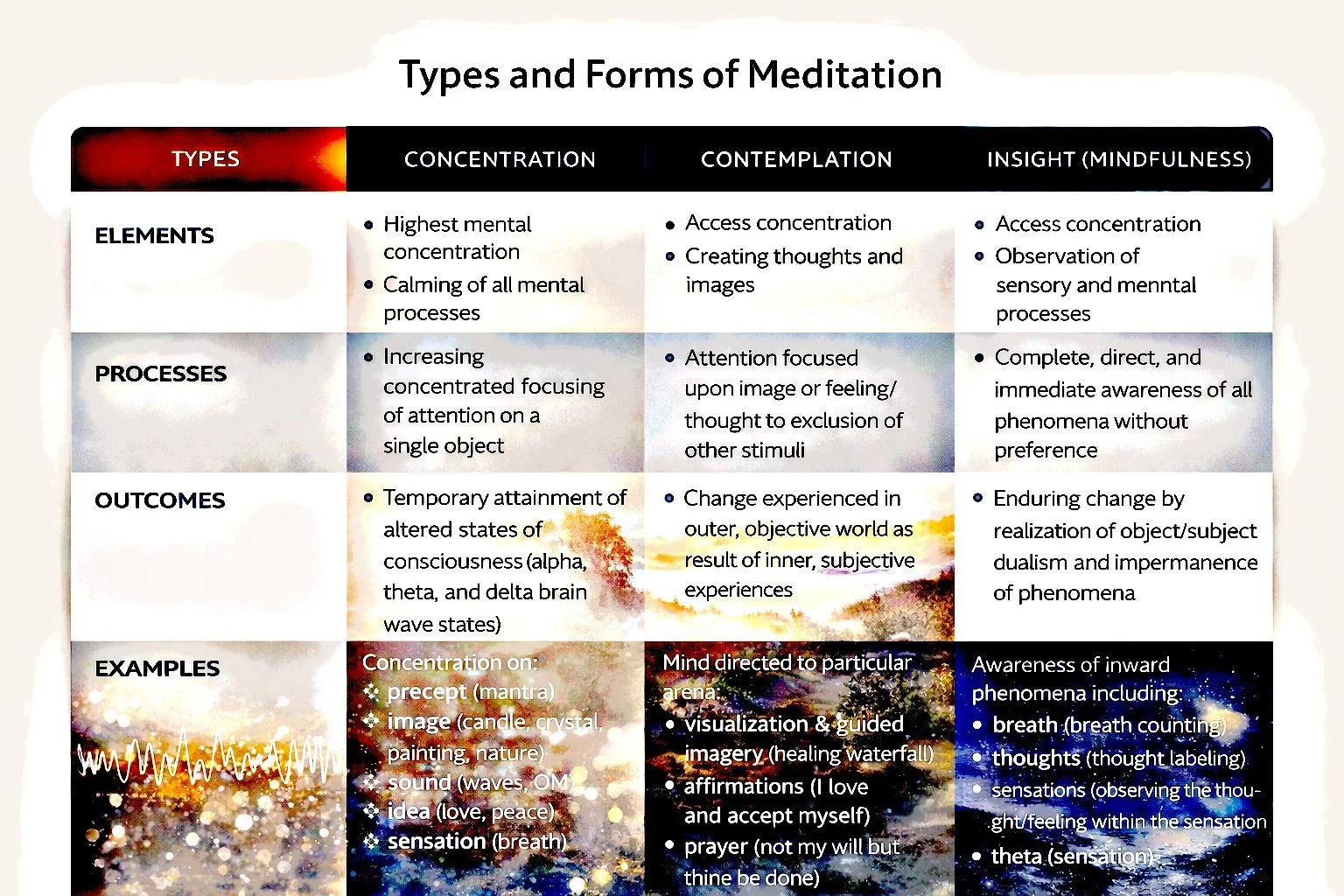
Types of Meditation
Most meditation approaches fall into three broad categories.
Concentration Meditation
Focusing attention on a single object, sound, sensation, or phrase. Examples: breath, candle flame, mantra, meaningful word.
Contemplation Meditation
Working with intentional imagery or reflection. Examples: affirmations, visualization, guided imagery, inquiry, prayer.
Mindfulness Meditation
Observing thoughts, sensations, and feelings without judgment or attachment. Awareness of what is present becomes the path to insight.
Impact on Health and Well‑Being
Research and lived experience show that meditation may support:
reduced cortisol
improved sleep
lowered blood pressure
increased melatonin
improved immune function
reduced inflammation
decreased anxiety and depression
improved memory and cognitive function
increased emotional resilience
reduced addictive behaviors
greater self‑acceptance and compassion
Meditation teaches the mind how to observe before reacting, offering space to choose peace over irritation, clarity over confusion, and presence over overwhelm.
Limitations and Cautions
Meditation is generally safe, but awareness is important:
Some people may be sensitive and should begin with short sessions.
Emotional material may surface; pause if needed.
Changes in sleep, energy, or mood may occur as the system rebalances.
Meditation is not a replacement for medical or psychological care.
If you are under care, let your provider know you are beginning a practice.
Meditation is a skill developed gradually. Consistency matters more than duration.
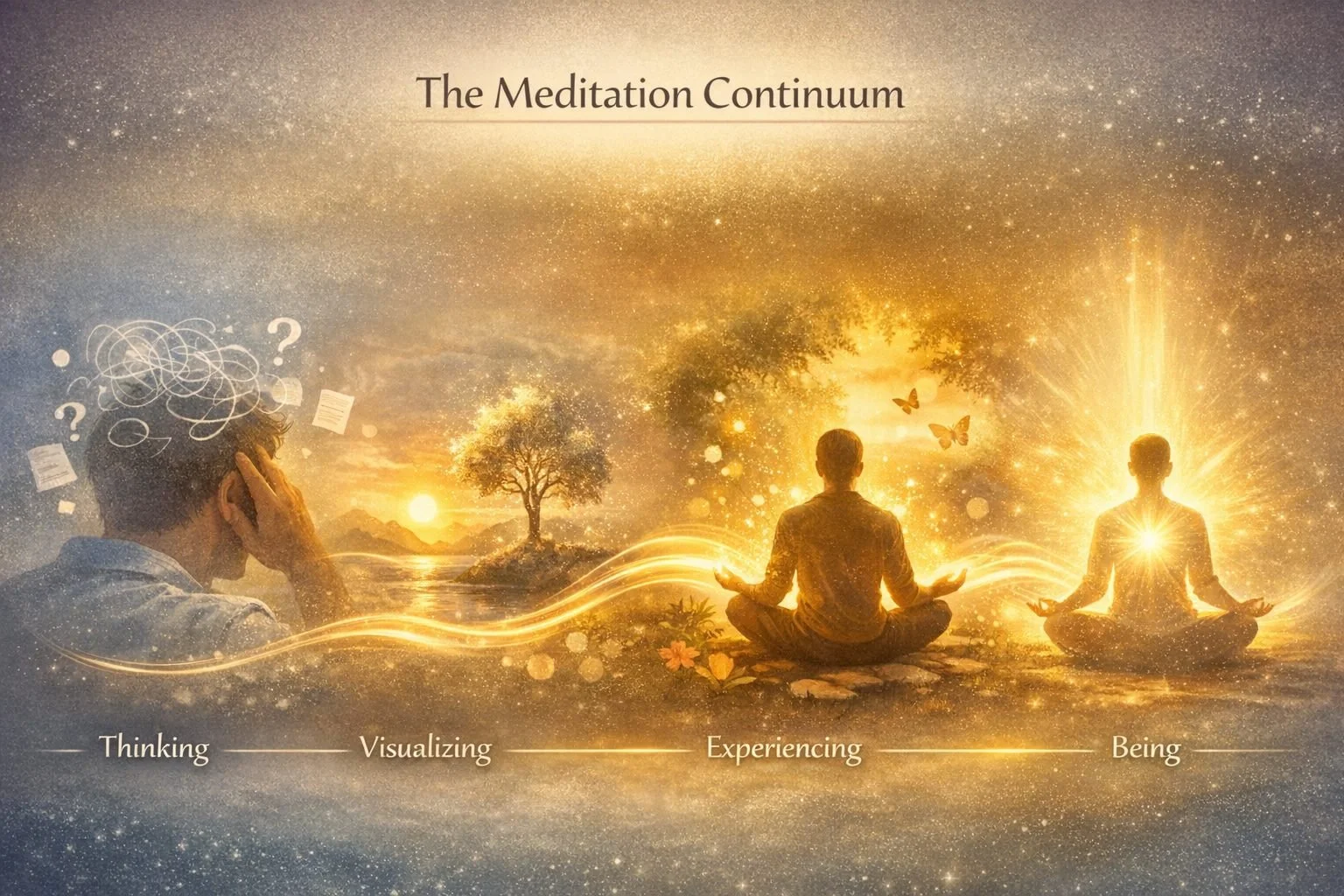
The Meditation Continuum
Meditation unfolds along a natural continuum:
Thinking
Visualizing
Experiencing
Being
As practice deepens, awareness shifts from dualistic (me observing something) to nondual (pure awareness). This is not a goal to achieve but a natural unfolding of inner quiet.
Exploring Meditation More Deeply
Meditation is both simple and profound. As practice deepens, many people experience:
greater emotional ease
increased intuition
improved self‑trust
a renewed sense of meaning
a clearer sense of inner direction
a more peaceful relationship with life
Meditation becomes not something you do — but a way you live.
For those who wish to explore meditation in greater depth, structured guidance can support consistency, understanding, and integration.
You may wish to purchase a self-study PDF or take a 3 hour meditation workshop or watch a mindfulness or mantra video below.
A quick index for finding your way in the Flow